
In which every company turns out to have two org charts.
The Ghost(s) in the Org Chart
The Illusion of Structure
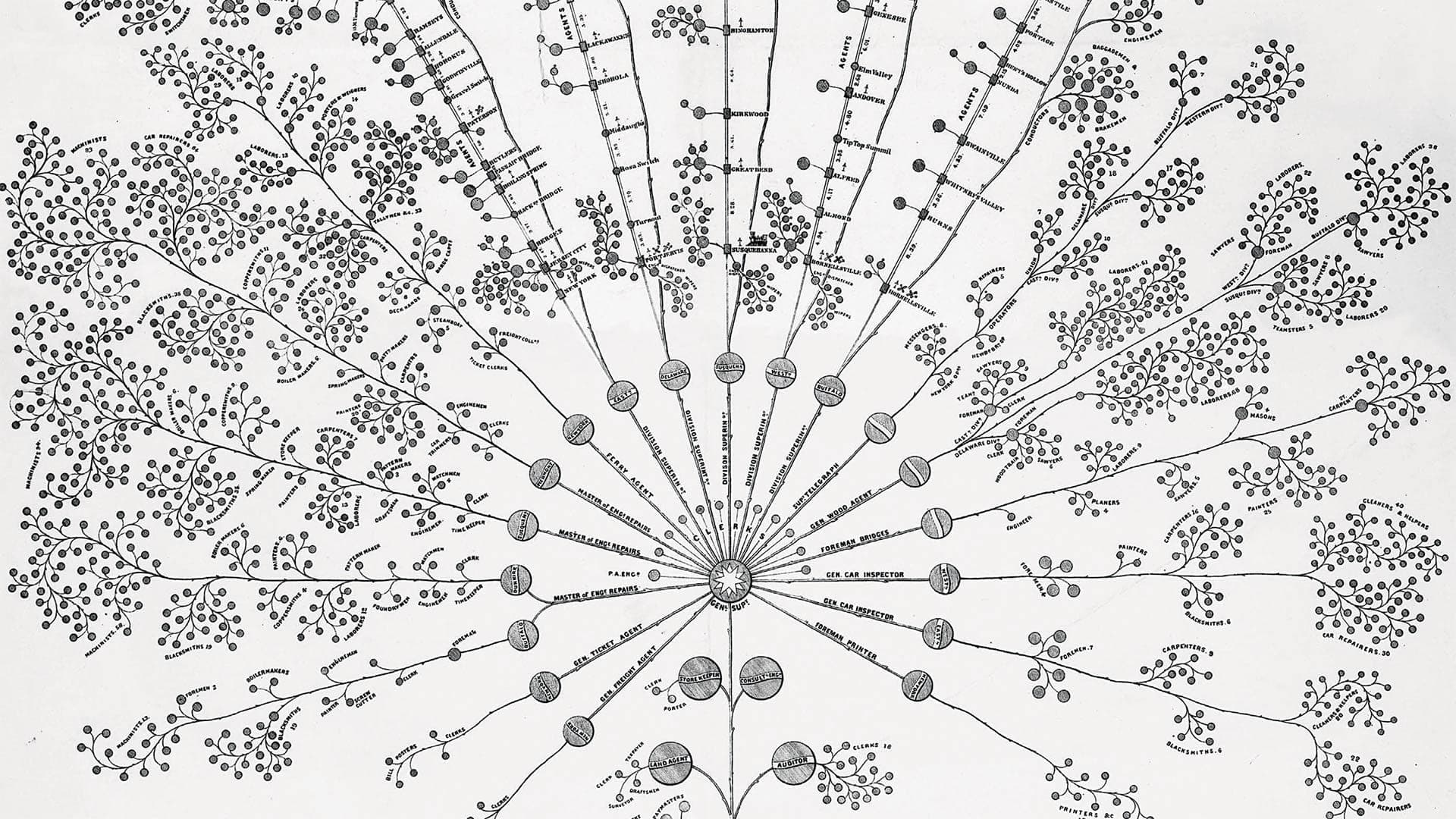
Every company has two org charts: the one it publishes and the one it runs. The published chart is clean. It has tidy boxes, rational reporting lines, an implied flow of authority. It suggests that work moves in straight paths: up for approval, down for execution, across for collaboration.
The operative chart looks different. It lives in calendar holds and Slack threads. It reveals itself in who gets added to a meeting at the last minute, who’s quietly consulted before something becomes official, who people apologize to when something goes wrong even if that person isn’t on the reporting line.
The official chart describes how work’s supposed to move. The operative one shows how it actually does: shaped by adaptation to constraint, not corruption.
Org charts are theories about coordination. The ghost org is coordination under constraint.
What Doesn't Fit in the Boxes
Org charts tell you who approves expenses and who signs reviews. They don’t tell you who people actually trust, or who can resolve a deadlock, or whose silence in a meeting carries more weight than another person’s title.
There’s no box for the person everyone checks with before a major decision, even if that person’s three layers down. No annotation for the individual who translates between engineering and sales so neither side escalates. No formal recognition for the person who remembers why the last attempt failed and prevents the same mistake from recurring.
These roles exist whether they’re acknowledged or not.
In some organizations they’re celebrated. In others they’re invisible until they leave, at which point the system briefly stalls and no one can quite articulate why. That invisibility isn’t accidental. Formal structure prefers clarity. Influence prefers context.
Tradeoffs, Not Solutions
Structure doesn’t eliminate tension. It redistributes it.
Put marketing under product and you reduce negotiation at the roadmap boundary. You also reduce adversarial pressure on what gets built. Keep them separate and you preserve tension that can improve quality, but you increase the coordination tax.
Centralize design and you get consistency. You also create queues. Decentralize and you get speed, and then fragmentation.
These aren’t flaws in the design. They’re consequences of the design. The mistake is believing the right configuration removes pain rather than choosing which pain you’re willing to manage.
Most debates about org design are debates about which tension feels more tolerable this quarter.
When the Chart Changes
Reorgs are usually presented as structural corrections. A realignment. A simplification. A move toward clarity.
Sometimes they’re exactly that.
Sometimes they’re something else: attempts to redraw lines around friction that’s escaped containment. A new reporting structure can absorb conflict for a while because it resets expectations. Meetings get renamed. Calendars are cleared. Titles change. The language of accountability shifts enough to feel like motion.
There’s a reason people say reorgs are set changes, not plot changes. The actors stay the same, and so does the conflict. The arguments just move to different rooms.
The personalities negotiating the work remain. The incentives remain. The constraints remain. The dependencies that produced the tension are often still there, just expressed through a different interface.
For a time, the new structure produces calm. Then the same pressures accumulate in slightly different corners.
Reorgs aren’t pointless. But they’re often downstream of the real issue, which isn’t structure but something harder to correct: trust, clarity of decision rights, or unresolved tradeoffs between speed and control.
Reading the Chart
If you treat an org chart as a theory rather than a fact, it becomes diagnostic.
Why does this team report into two unrelated functions? Why does this role exist to “tie it all together”? Why are there three managers over a problem that used to have one?
Each extra layer is a record of past discomfort. Dotted lines usually reflect compromises no one wanted to formalize. “Centers of excellence” are bets on consistency over autonomy.
The chart doesn’t tell you what’s broken. But it tells you where strain accumulates.
Follow the calendar load when something urgent breaks. Notice whose Slack lights up first. Listen for which names surface in “we should probably run this by…” conversations.
The operative chart reveals itself under pressure.
Structure Isn't the System
Structure is scaffolding. It defines where authority’s supposed to flow. It doesn’t define how judgment’s exercised.
The real system lives in norms: how disagreement’s handled, who gets protected when something fails, whether a miss triggers curiosity or defensiveness. None of that appears in a box.
An org chart can reveal weight-bearing walls. It can’t guarantee the integrity of the beams.
Structure isn’t where most of these problems start. But it can surface the sites of tension.
The published chart is the theory. The ghost org is the practice, and the work sits in the gap between them.
Footnotes
Some reorgs meaningfully redistribute decision rights and simplify coordination. A team that was previously split across three reporting lines can move faster once ownership’s clarified. The point isn’t that structure never matters, but that it rarely resolves tensions that originate in incentives, trust, or competing definitions of success.
Dotted lines aren’t inherently weak. In some organizations they allow expertise to influence decisions without bloating reporting structures. The problem arises when influence and accountability diverge permanently, and no one’s sure who ultimately owns the outcome.
| Published | 15 June 2025 (1 year ago) |
|---|---|
| Reading time | 5 min |
| Tags | org structure, communication |
| Constellation | Common Ground |
Reply
I’d welcome your thoughts on this essay. Send me a note →