
In which prevention erases its own evidence.
Measured in Digits
The Engineer Who Saved Water
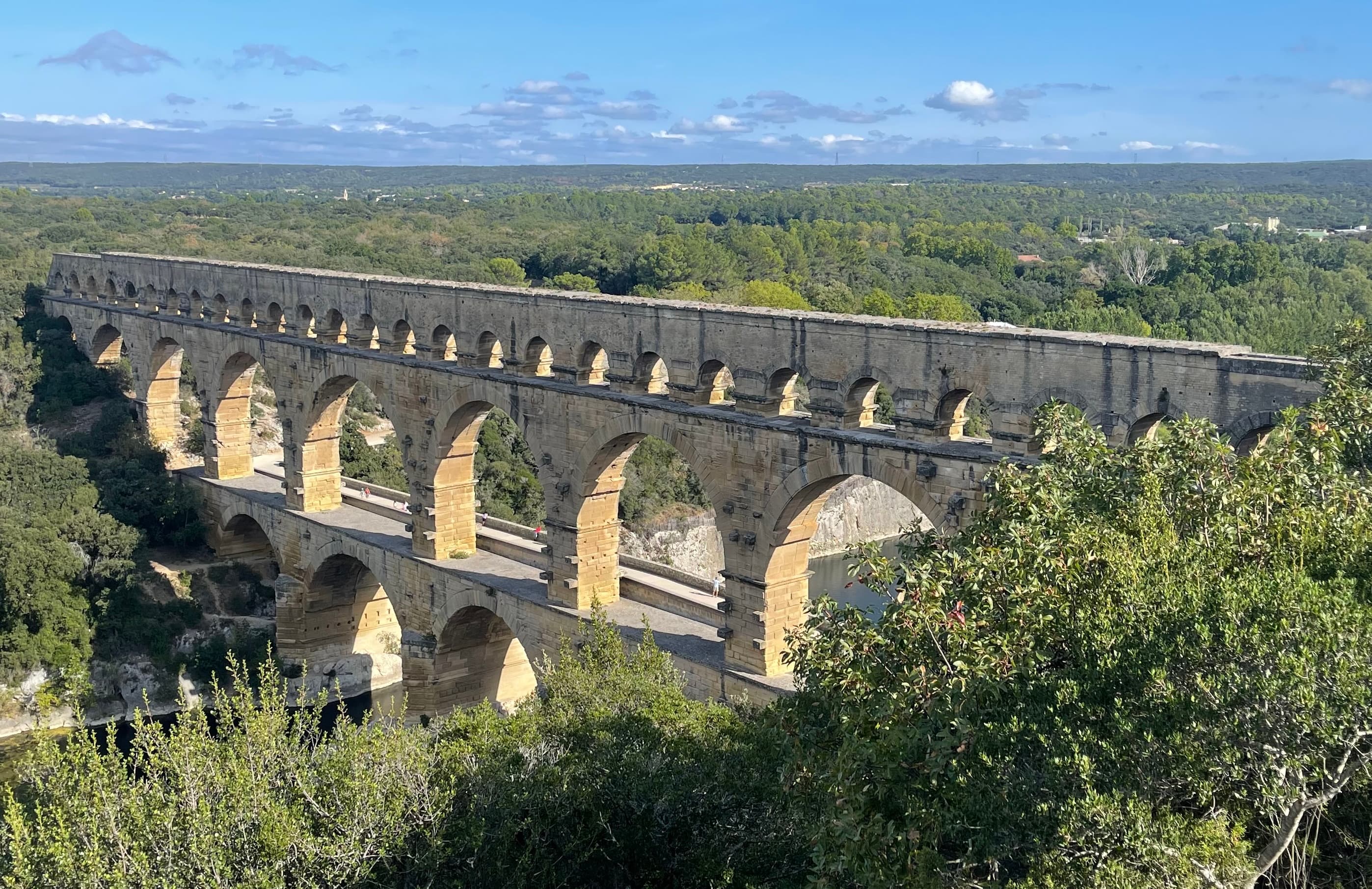
Aqueducts are about some of the most impressive things you can see, because (1) it's almost impossible to understand how, at that time, the Roman Empire managed to make them, and (2) almost everything visually impressive about them is sort of a distraction. Enormous arches that cross valleys and survive two thousand years and wind up on postcards. They take up 100 photos in your camera roll. But the actual trick, which I've spent a little bit of time trying to understand, is simple: the water has to just go slightly downhill.
Over distances that boggle the mind, there's an ever so slight grade from point A to point B.
The key is in the slight downwardness: not too fast, or you're a Roman with water problems, and not too little, or you have thirty miles of stone arches and water stuck exactly where it is.
Some Roman was responsible for that ever-so-precise, tiny amount of water going downhill, and I like to imagine them. Like everyone else, I can look at the arches, see the magnificence. But in that hard, hard time to live, that engineer (no idea if they were called that) had to walk under those stones worrying about differences almost no other Roman can see, probably get screamed at by some provincial governor or whatever the Roman mayor equivalent was.
I can imagine and vaguely understand how something like the Golden Gate Bridge would get fixed: cranes, engineers, sensors, iPads, nets, meetings, trucks, boats, a guy named Steve who manages the morning crew. My brain breaks a little thinking about the same thing two thousand years ago, with that Roman official complaining at you. That aqueduct is standing there, 30 miles long, and some Roman has to walk the stretch and figure out what's wrong with the stone that settled or the grade that's off.
How does that engineer notice something barely perceptible against the scale of everything around it? But that person, and all those people who worked on aqueducts, knew when it was time to say, basically, yes, I know it cost a lot in money and labor (possibly paid, possibly enslaved: tough time to be alive). But tear it apart anyway.
Roman arches get all the postcards, the refrigerator magnets.
Walking the Stones
A lot of us do a less impressive version of this to earn our living, which is at least in part why the arches are so mind-boggling. We're not exactly bringing water thirty miles across Gaul to Romans who need it. For a lot of us, someone is now asking why some number is different from yesterday's number.
That can still involve an incredible amount of staring. Say you have a spreadsheet, off by some amount immaterial to civilization or your town's drinking water and which is completely unacceptable to the eight people currently staring at today's number. Somewhere a customer has two IDs, or February has one more day than usual and something broke, or somebody wanted something to work a certain way but neglected to tell you or write it down.
We kind of do the languid walk along the arches, looking for the settled stone, in our own ways.
Did that engineer, when they fixed the water flow, get their flowers? Their statue that all visitors would also document in their camera rolls? I doubt it, which is the funny part of preventative or maintenance work: once you get the water flowing, you've kind of eliminated the evidence you did anything at all. Nobody says, “thank God somebody noticed the leap year.” The water has to flow.
After all this, when the aqueduct, or Golden Gate Bridge, or that partly boring thing at work that needs you to make sure that it always works, works, there isn't much left to look at. The water flows; we just open the spigot and fill up. Water comes out where water is supposed to come out.
I imagine that Roman engineer walking home after discovering the problem with the aqueduct. The citizens need their water, and maybe nobody particularly cared anymore when the fountains worked again. And maybe that engineer wasn't even bothered.
And here we are, two thousand years later, taking pictures of the arches.
| Published | 29 December 2024 (2 years ago) |
|---|---|
| Reading time | 5 min |
| Tags | standards, philosophy |
| Constellation | The Scaffold |
Reply
I’d welcome your thoughts on this essay. Send me a note →